Ready to trade? Set your own offer.
Join the P2P marketplace to buy or sell crypto on your terms.
What Is Bitcoin? A Plain Guide for Beginners
A beginner-friendly walkthrough of bitcoin: what it is, how the network moves money, why it has value, and how to buy and store it safely.
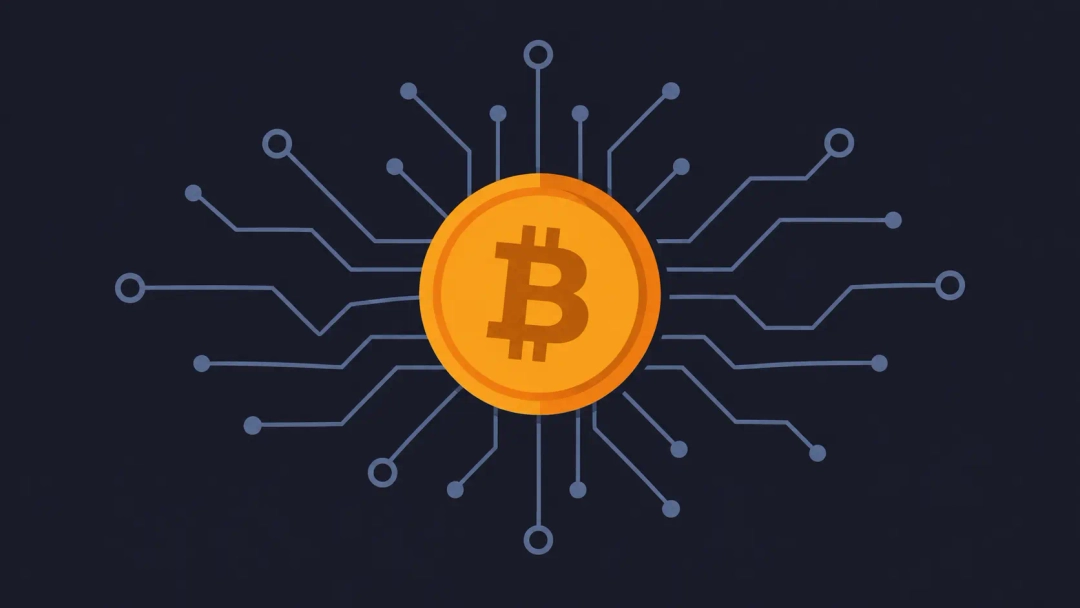
Most explanations of bitcoin do one of two things: they assume you already get it, or they bury you in jargon. This guide tries to avoid both. Over the next few minutes you'll get a working sense of what bitcoin is, how the network moves money around, why it has a price at all, where the real dangers lie, and how someone new can buy and store it without making an expensive mistake. Terms get explained the first time they come up. Nothing below is a prediction, and none of it is advice to buy.
What bitcoin actually is
Bitcoin is a digital currency that lets people send value to one another over the internet with no bank in the middle. A worldwide network of computers keeps a shared public record of ownership, and the rules cap the total supply at 21 million coins. It launched in 2009, and it trades under the ticker BTC.
A few details trip people up early. "Bitcoin" with a capital B generally refers to the network and its rules, while lowercase "bitcoin" or "BTC" refers to the coins. There's also nothing physical involved. No coin, no card, no secret file. What you own is the right to spend, noted on the public ledger.
And no one runs the thing. The design appeared in a nine-page white paper published in October 2008 by someone writing as Satoshi Nakamoto, an identity that remains unknown. The software went live in January 2009. You don't need a full coin to take part, either. Each bitcoin divides into 100 million units called satoshis.
The three parts of the network
Bitcoin rests on three ideas that depend on each other.
The blockchain is the shared ledger. Payments are collected into blocks, and every block points back to the one before it, so the record forms a chain anyone can inspect.
Nodes are computers that hold a copy of the ledger and check each payment and block against the rules. Anyone is free to run one; the software is freely available.
Miners spend computing power, in a scheme called proof of work, to propose the next block. They're paid in newly created bitcoin plus the fees attached to the payments they include.
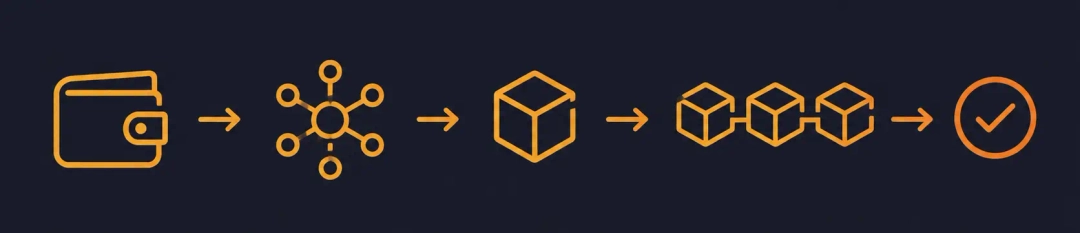
Say you want to send someone money. Your wallet, the app or device that manages your keys, assembles the payment and signs it with your private key, the secret that proves you're allowed to spend. Nodes check that the payment obeys the rules. Miners pack valid payments into a candidate block, which shows up about every ten minutes. Nodes verify the block and attach it to the chain. Each block added later makes your payment harder to reverse, and those are confirmations.
New bitcoin only appears as mining rewards. The reward is cut in half about every four years, and since April 2024 it has been 3.125 BTC per block. The network passed its 20 millionth coin in March 2026, and the last fraction should arrive around 2140.
Where the value comes from
Bitcoin has no gold, no government, and no company standing behind it. Its price is set by demand, and the demand comes from a few things people find appealing:
- The supply is fixed and publicly known.
- It can move across borders at any time.
- It's divisible, so tiny amounts are possible.
- No central bank can create more of it or shut the network down.
- You can hold your own coins directly if you choose.
Scarcity on its own doesn't guarantee a price. Bitcoin has been volatile. As Fidelity points out, it dropped from almost $69,000 in November 2021 to roughly $15,500 a year later, a decline of about three-quarters. Whether it serves as savings, as payment, or as a gamble depends on the person holding it.
Bitcoin versus money in a bank
Bitcoin | Bank money | |
What you hold | Keys that control coins | A claim on a bank |
Who runs it | A distributed network | The bank and regulators |
Supply | Capped at 21 million | Not capped; expanded by central banks and lenders |
Mistakes | Hard to reverse | Chargebacks and support |
Hours | Always on | Business hours for many transfers |
Price | Highly volatile | Steadier day to day |
Neither one is simply better. They hand different risks to different people. With a bank, you place your trust in an institution. With bitcoin, you trust the code, and you take on the job of securing your own money.
How safe is it?
It helps to take the question apart, because the layers fail in different ways.
The network has run without stopping since 2009, and no attacker has managed to rewrite its established history. Bugs have turned up in the software over the years, but they were found and fixed.
The trouble usually comes from everything surrounding it:
- Exchange failures. An exchange is a platform for buying and selling crypto. Mt. Gox, then a leading one, collapsed in 2014 with hundreds of thousands of customers' bitcoin missing. The network kept producing blocks the whole time.
- Scams and phishing. Fake support reps, fake giveaways, and "guaranteed returns" are everywhere. No legitimate service will ask for your seed phrase, the list of words that can restore a wallet.
- Mistakes that can't be undone. Money sent to the wrong address cannot be recalled.
- Lost access. If you lose your keys and every backup, nobody can reset them for you.
- Volatility. Prices can fall hard, so only put in money you can afford to lose.
One rule covers most scams: if a stranger contacts you first and the conversation drifts toward bitcoin, assume fraud until you have solid proof otherwise.
Whether you can legally own bitcoin, and how it's taxed, depends on your country. Ownership is legal in most places, but the rules for exchanges, reporting, and taxes shift often, so check what applies where you live.
Buying bitcoin
- Pick a regulated platform in your country. Compare fees, security features like two-factor authentication, and how clearly the company explains its terms.
- Verify your identity. Regulated exchanges have to confirm who you are before you can trade.
- Start small. Buy an amount you could lose without it hurting. Fractions are perfectly fine.
- Decide where to keep it. Leaving coins on an exchange is convenient, but it means trusting the company. More on that below.
A careful first purchase looks like this: buy a little on a regulated platform, withdraw it to a wallet you control, and confirm it arrived before doing anything else. That single round trip teaches you the whole process while the stakes are still low.
Other routes exist. Peer-to-peer marketplaces put you in direct contact with another person, so look into how disputes and payments are handled. Some brokerages sell bitcoin funds, which track the price but hand you neither the coins nor the keys.
Storing it safely
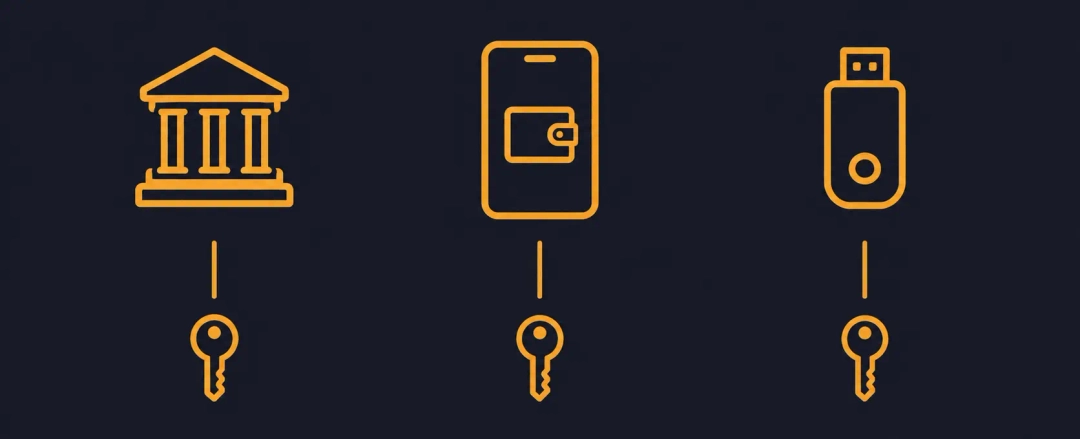
A bitcoin wallet doesn't hold coins the way a leather wallet holds cash. It holds keys. The coins themselves stay on the blockchain, and your keys are the only way to spend them.
That leaves two arrangements. In custodial storage, an exchange holds the keys and your balance is really a claim against that company. In self-custody, you hold the keys, which removes the company risk but puts every mistake on you.
The same bitcoin can sit in a few different places:
Where it sits | Who holds the keys | Main risk |
Exchange account | The exchange | The company fails, freezes withdrawals, or is breached |
Software wallet (an app) | You | Malware, phishing, a lost backup |
Hardware wallet | You | A lost seed phrase, or a fake device from an untrusted seller |
A short checklist:
- Write your seed phrase on paper or metal, offline. Never photograph it or type it into a website.
- Keep a backup somewhere separate and secure.
- Send a small test payment before any large transfer, and read the address carefully.
- Once your holdings are worth protecting, consider a hardware wallet, a small offline device that signs payments.
- Plan for the worst, so that someone you trust could recover your funds if something happened to you.
If you later want to use bitcoin's value inside Ethereum apps, wrapped bitcoin is one option. Senpero, the platform behind this guide, offers WBTC for peer-to-peer trading from your own wallet. Here's what it is, and what it isn't.
Wrapped bitcoin (WBTC)
Bitcoin's own network can't run smart contracts, the self-executing programs that power lending, trading, and other apps on Ethereum. Wrapped Bitcoin, or WBTC, is an ERC-20 token (a standard token format on Ethereum) meant to represent one bitcoin. Since 2019, custodians, meaning companies that hold assets for others, have kept real bitcoin in reserve against it. The point is to let people use bitcoin's value in Ethereum apps without selling the underlying coins.
WBTC is not the same as owning bitcoin. It's a claim on custodians, so you're relying on them and on the token's smart contract. Custody has been controversial. In 2024, BitGo brought in BiT Global, a Hong Kong custodian with a stake held by Tron founder Justin Sun. Some DeFi platforms tightened their risk limits, and Coinbase delisted WBTC. A March 2026 announcement said BiT Global would hold two of the three vault keys and take over vault management. Reserves are published on the proof-of-reserve dashboard.
WBTC isn't risk-free, and it isn't the right choice for everyone. Disclosure: Senpero publishes this guide and also offers WBTC, so read this section with that in mind.
Common questions
Who created bitcoin? A person or group using the name Satoshi Nakamoto published the white paper in 2008 and launched the software in 2009. They stepped away around 2010 to 2011, and no one has confirmed their identity.
Do I need to buy a whole bitcoin? No. One bitcoin divides into 100 million satoshis. Your platform sets its own minimum, but small fractions are fine.
What is wrapped bitcoin? WBTC is an ERC-20 token on Ethereum designed to represent one bitcoin, backed by bitcoin held in reserve by custodians. It lets holders use bitcoin's value in Ethereum apps. It isn't native bitcoin, and it carries custodian and smart contract risk.
What happens when all the bitcoin is mined? Existing coins keep working. Miners will live on transaction fees alone, and the last coins should appear around 2140. Whether fees can secure the network by themselves is still an open question.
Is bitcoin anonymous? No. It's pseudonymous. Addresses don't carry names, but every transaction is public forever, and exchange records plus blockchain analysis can tie addresses to real people.
The short version
Bitcoin is a capped digital currency run by a network rather than a company. Your keys are your coins; a balance on an exchange is only a claim on a business. Most people who lose money do so through scams, exchange failures, and human error, not because the network broke. And wrapped bitcoin is a separate asset with its own custody and smart contract risks.
If you're curious about using bitcoin's value inside Ethereum apps, you can look further and make up your own mind: Discover Wrapped Bitcoin (WBTC) on Senpero.
This guide is educational and is not financial, legal, or tax advice. Crypto is volatile, and you can lose money. Last updated: September 2026.
Ready to Trade?
Join thousands of traders on our secure P2P platform with smart contract protection.
Ready to trade? Set your own offer.
Join the P2P marketplace to buy or sell crypto on your terms.
Ready to Trade?
Start trading cryptocurrency instantly with peer-to-peer buyers and sellers using local payment methods.